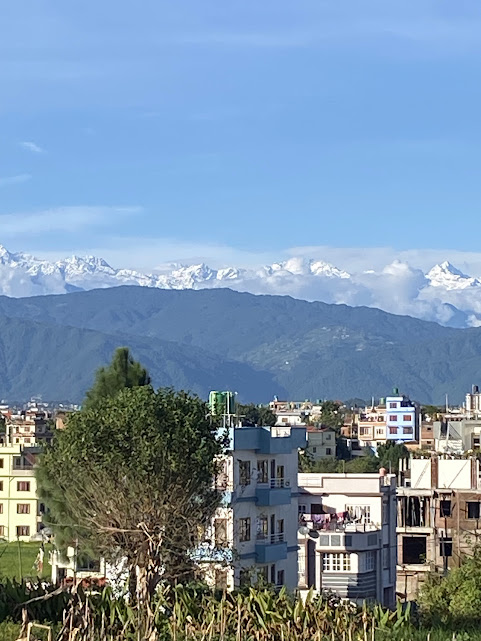
The Himalayas are one of the defining landscapes of Nepal, and you do not always have to travel deep into the mountains to see them.
On a clear day, magnificent snow-covered peaks can be seen from different locations around the Kathmandu Valley. From hilltops and viewpoints to rooftops, gardens and quiet corners of the city, the distant Himalayas can become a beautiful part of the Kathmandu landscape.
For many visitors, seeing the mountains for the first time from Kathmandu is an unforgettable introduction to Nepal.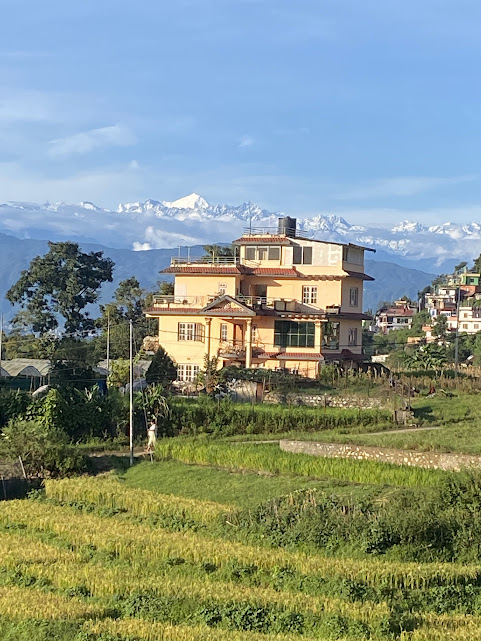
Kathmandu lies within a valley surrounded by green hills, while the great Himalayan ranges rise beyond the northern horizon.
The mountains may appear differently depending on where you are standing, the weather, the season and the clarity of the atmosphere. On exceptionally clear mornings, distant snow-covered peaks can stand out beautifully above the hills surrounding the valley.
At other times, clouds, haze and changing weather may hide the mountains completely.
This changing view is part of the experience. You may pass through Kathmandu without seeing a single mountain and then suddenly wake up to a spectacular Himalayan panorama the following morning.
The exact mountains visible from Kathmandu depend on the viewing location and atmospheric conditions. The wider Himalayan landscape north of the Kathmandu Valley includes several important mountain ranges.
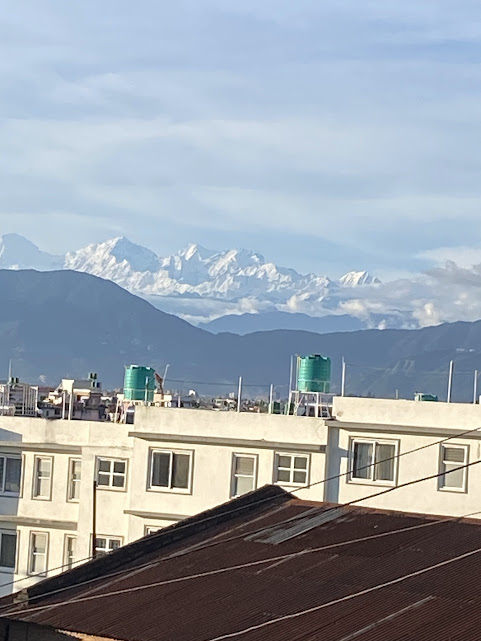
The Langtang range is one of the prominent Himalayan landscapes north of Kathmandu.
The mountains of the Langtang region can form a beautiful snowy backdrop from suitable viewpoints around the Kathmandu Valley. Langtang is also one of Nepal's most accessible trekking regions from Kathmandu, allowing travelers to experience these mountains much more closely.
Ganesh Himal is another striking mountain range visible from some locations around the Kathmandu Valley.
Its distinctive peaks can appear beyond the nearer green hills, particularly when the atmosphere is clear.
The range provides a beautiful contrast between the lower hills, villages and forests of central Nepal and the snow-covered Himalayan peaks beyond.
The broader central Himalayan landscape includes the Manaslu region and several other major mountain ranges.
Mount Manaslu, at 8,163 meters, is one of the world's highest mountains. Depending on the location, viewing angle and atmospheric clarity, parts of the central Himalayan panorama may be visible from elevated locations around the Kathmandu Valley.
Because distant mountain peaks can look very different depending on weather, light and perspective, identifying individual mountains from a photograph should always be done carefully.
Beautiful mountain views are possible from many locations around the Kathmandu Valley and surrounding hills.
Nagarkot is one of the best-known viewpoints near Kathmandu for Himalayan scenery.
Located on the eastern side of the Kathmandu Valley, Nagarkot is especially popular for sunrise and sunset views. On a clear morning, the distant Himalayan range can provide a spectacular backdrop beyond the surrounding hills.
The hills north of Kathmandu provide elevated viewpoints toward the Himalayan range.
The Shivapuri area is also popular for hiking and nature experiences. From suitable locations, the combination of forested hills, Kathmandu Valley and distant mountains creates a beautiful landscape.
Nagarjun is another elevated area around Kathmandu where visitors can enjoy views across the valley and toward the surrounding mountains.
The higher elevation provides a different perspective from the city below and can be particularly rewarding on clear days.
You do not always need to visit a famous viewpoint to see the Himalayas.
On a clear day, mountain peaks may appear from hotel terraces, rooftops, open spaces, roads, gardens and elevated neighborhoods around Kathmandu, Patan and Bhaktapur.
Sometimes the most memorable mountain photograph is an unexpected one.
Mountain visibility changes from day to day.
Clouds, haze, humidity, rain and atmospheric conditions can all affect what you can see. Clear mornings often provide better opportunities for viewing distant mountains.
October and November are generally known for clear Himalayan views following the monsoon season, while clear periods can also occur during March, April and May.
However, there is never a guarantee. Even during traditionally favorable seasons, clouds or haze can hide the mountains.
If you wake up in Kathmandu and notice a clear horizon, it is worth taking a moment to look toward the mountains.
You may discover a spectacular view waiting just beyond the city.
One of the fascinating things about viewing the Himalayas from Kathmandu is that the scenery is never exactly the same.
Early morning light can give the mountains a soft appearance. As the sun rises, the snow-covered peaks may become brighter and more clearly defined.
Clouds can move across the hills, partially revealing and then hiding the mountains again.
During the changing seasons, the landscape around the valley also changes, creating different combinations of green hills, villages, forests, city rooftops and distant snowy peaks.
For photographers and travelers alike, there is always something different to notice.
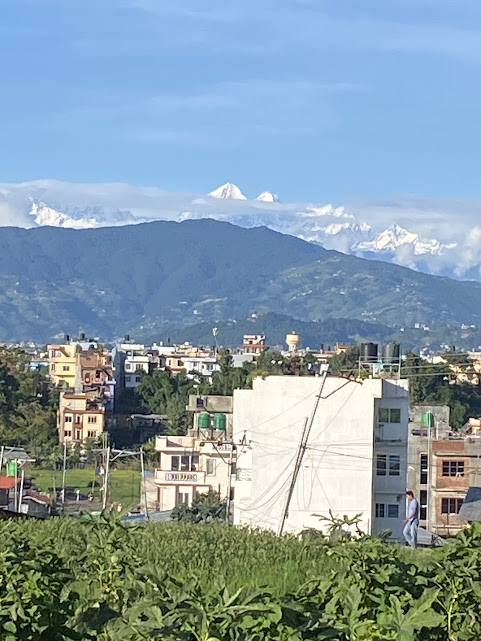
For many travelers, seeing the Himalayas from Kathmandu is only the beginning.
The distant mountains may inspire a desire to walk closer to them and experience the landscapes beyond the valley.
Nepal offers trekking routes ranging from short hikes around Kathmandu to longer journeys through the Langtang, Manaslu, Everest, Annapurna and other Himalayan regions.
A mountain that first appears as a distant snowy silhouette from Kathmandu can later become part of your trekking journey.
You can see it from the valley, travel toward it, walk beneath it and experience the villages, forests, rivers and mountain landscapes that surround it.
That is one of the special experiences of traveling in Nepal.
The photographs featured on this page are from our collection of Himalayan views captured from different locations within and around the Kathmandu Valley.
Each photograph represents the mountains as they appeared from a particular place and under particular weather and lighting conditions.
We have included these photographs to share a simple but beautiful part of traveling in Nepal: the opportunity to see the Himalayas even while staying in and around Kathmandu.
Mountain identification can sometimes be difficult when peaks are viewed from a great distance. Where individual mountains or ranges are identified, we aim to provide the information as accurately as possible.
We hope these photographs give you a glimpse of the Himalayan landscape that surrounds Kathmandu and perhaps inspire you to experience the mountains of Nepal more closely.
Kathmandu is a historic and lively city, but beyond its streets, temples and surrounding hills lies one of the world's greatest mountain landscapes.
On a clear morning, all it may take is a few minutes of looking toward the horizon to see the Himalayas.
Sometimes, the mountains are not just the destination.
They are already there, quietly watching over the valley.