Required Permits for Nar Phu Valley Trek
The Nar Phu Valley Trek is one of the most fascinating remote trekking experiences in Nepal's Annapurna region. The trail leads into the beautiful and culturally rich valleys of Nar and Phu in Manang District, where trekkers can experience traditional Himalayan villages, Buddhist monasteries, dramatic mountain landscapes and a quieter side of the Annapurna region.
Because Nar Phu is designated as a restricted trekking area, foreign trekkers need specific permits and must follow the Government of Nepal's regulations for restricted-area trekking.
This guide explains the required permits, permit fees, Annapurna Conservation Area Permit (ACAP), TIMS card requirements and other important information for the Nar Phu Valley Trek.
What Permits Are Required for the Nar Phu Valley Trek?
For foreign trekkers, the main trekking documentation required for the Nar Phu Valley Trek includes:
Special Restricted Area Permit for Nar Phu
Annapurna Conservation Area Permit (ACAP)
TIMS card
The Nar Phu Restricted Area Permit is particularly important because Nar and Phu are located within a government-designated restricted trekking area.
1. Nar Phu Restricted Area Permit
Foreign trekkers entering the Nar Phu restricted area require a Special Restricted Area Permit.
The permit is arranged through a registered trekking agency in accordance with the Government of Nepal's requirements for restricted-area trekking.
Nar Phu Restricted Area Permit Fee
December to August: USD 75 per person for the first 7 days
September to November: USD 100 per person for the first 7 days
After 7 days: USD 15 per person per additional day
These are the permit rates published by the Department of Immigration for the Manang restricted trekking area covering Narpa Rural Municipality and Nasho Rural Municipality.
The restricted-area permit fee applies to the time spent within the designated restricted area and is separate from other permits required for the wider trekking itinerary.
Nar Phu Permit Fee at a Glance
December–August: USD 75 per person / first 7 days
September–November: USD 100 per person / first 7 days
After 7 days: USD 15 per person / additional day
For example, if a trekker spends five days inside the Nar Phu restricted area during December, the applicable restricted-area permit fee is USD 75 per person.
If the stay extends beyond seven days, the additional days are charged at USD 15 per person per day.
Permit fees are subject to government regulations and may change in the future.
Nar Phu Valley lies within the Annapurna Conservation Area, so foreign trekkers also need an Annapurna Conservation Area Permit (ACAP).
The ACAP is separate from the Nar Phu Restricted Area Permit.
The Restricted Area Permit provides authorization for trekking in the designated restricted area, while the ACAP is the conservation-area entry permit required for the Annapurna Conservation Area.
Foreign visitors: NPR 3,000 per person
Approximately USD 25 per person, depending on the prevailing exchange rate.
The ACAP fee is separate from the Nar Phu Restricted Area Permit and TIMS card fee.
TIMS stands for Trekkers' Information Management System.
The TIMS system helps maintain trekking records and supports trekker safety and management.
According to the current Nepal Tourism Board information, Nar Phu Annapurna Circuit Trek is specifically included among the Annapurna routes where trekkers must be accompanied by a licensed trekking guide and carry a trekking-agency-issued TIMS card.
TIMS is arranged through a government-registered trekking agency as part of the required trekking documentation.
Total Main Permit and TIMS Costs
For a foreign trekker from a non-SAARC country, the main costs can be summarized as follows:
Nar Phu Restricted Area Permit:
USD 75 per person for the first 7 days from December to August
Nar Phu Restricted Area Permit:
USD 100 per person for the first 7 days from September to November
Additional restricted-area days:
USD 15 per person per day after 7 days
Annapurna Conservation Area Permit (ACAP):
NPR 3,000 per person (approximately USD 25)
TIMS Card:
NPR 2,000 per person (approximately USD 16)
These are separate fees and should not be presented as though they are a single permit
Yes.
Nar and Phu in Manang are designated as a restricted trekking area by the Government of Nepal.
Because of this status, foreign trekkers must obtain the appropriate Restricted Area Permit and follow the special regulations applicable to restricted-area trekking.
The restricted-area permit is arranged through a registered trekking agency rather than being obtained independently by individual trekkers.
Yes.
Nar Phu is a restricted trekking area, and the Government of Nepal requires trekkers to follow the applicable guide and trekking-agency arrangements.
The Nepal Tourism Board specifically lists the Nar Phu Annapurna Circuit Trek among the routes requiring a licensed trekking guide and a trekking-agency-issued TIMS card.
A registered trekking agency arranges the required permit, TIMS card and trekking support.
Nar Phu should not be treated as an ordinary independent trekking route.
Because it is a restricted area, foreign trekkers require the appropriate Restricted Area Permit and must comply with the government's requirements for restricted-area trekking.
The restricted-area permit and applicable trekking documentation are arranged through a registered trekking agency.
Nar Phu Valley Trek Overview
The Nar Phu Valley Trek takes trekkers into a remote part of Manang, away from the busier sections of the Annapurna Circuit.
The trail passes through spectacular Himalayan scenery, narrow gorges, traditional settlements, Buddhist monasteries and high mountain landscapes.
The villages of Nar and Phu are among the cultural highlights of the trek. Their traditional architecture, Buddhist heritage and Himalayan way of life provide a fascinating insight into the region's long-established mountain culture.
Depending on the chosen itinerary, the trek can also include the challenging Kang La Pass, connecting Nar Phu with the Annapurna Circuit.
Remote Nar and Phu villages
Traditional Himalayan stone-built houses
Buddhist monasteries and chortens
Tibetan-influenced Himalayan culture
Dramatic mountain valleys and gorges
Spectacular Himalayan mountain views
Kang La Pass on itineraries that include the pass
Less-crowded trekking trails
Possibility of combining Nar Phu with the Annapurna Circuit
Nar Phu Valley Trek and the Annapurna Circuit
Nar Phu can be combined with the Annapurna Circuit to create a longer and more varied Himalayan trekking journey.
After exploring Nar and Phu, trekkers may cross Kang La Pass and connect with the Annapurna Circuit, depending on the selected route, itinerary and current trail conditions.
When combining the two routes, it is important to check the permit and TIMS requirements for the entire itinerary.
The Nar Phu Restricted Area Permit does not replace other permits or documentation required for the remaining sections of the trek.
For quick reference:
Nar Phu Restricted Area Permit
December–August: USD 75 per person for the first 7 days
September–November: USD 100 per person for the first 7 days
After 7 days: USD 15 per person per additional day
Annapurna Conservation Area Permit (ACAP): NPR 3,000 per foreign visitor (approximately USD 25)
TIMS Card: NPR 2,000 per Foreign trekker (approximately USD 16)
The Restricted Area Permit, ACAP and TIMS card are separate requirements.
Our Experience with Nar Phu Valley Trekking
Nepal Everest Himalaya Hiking Pvt. Ltd. is a registered trekking company in Nepal, and we have organized trekking journeys to the Nar Phu Valley.
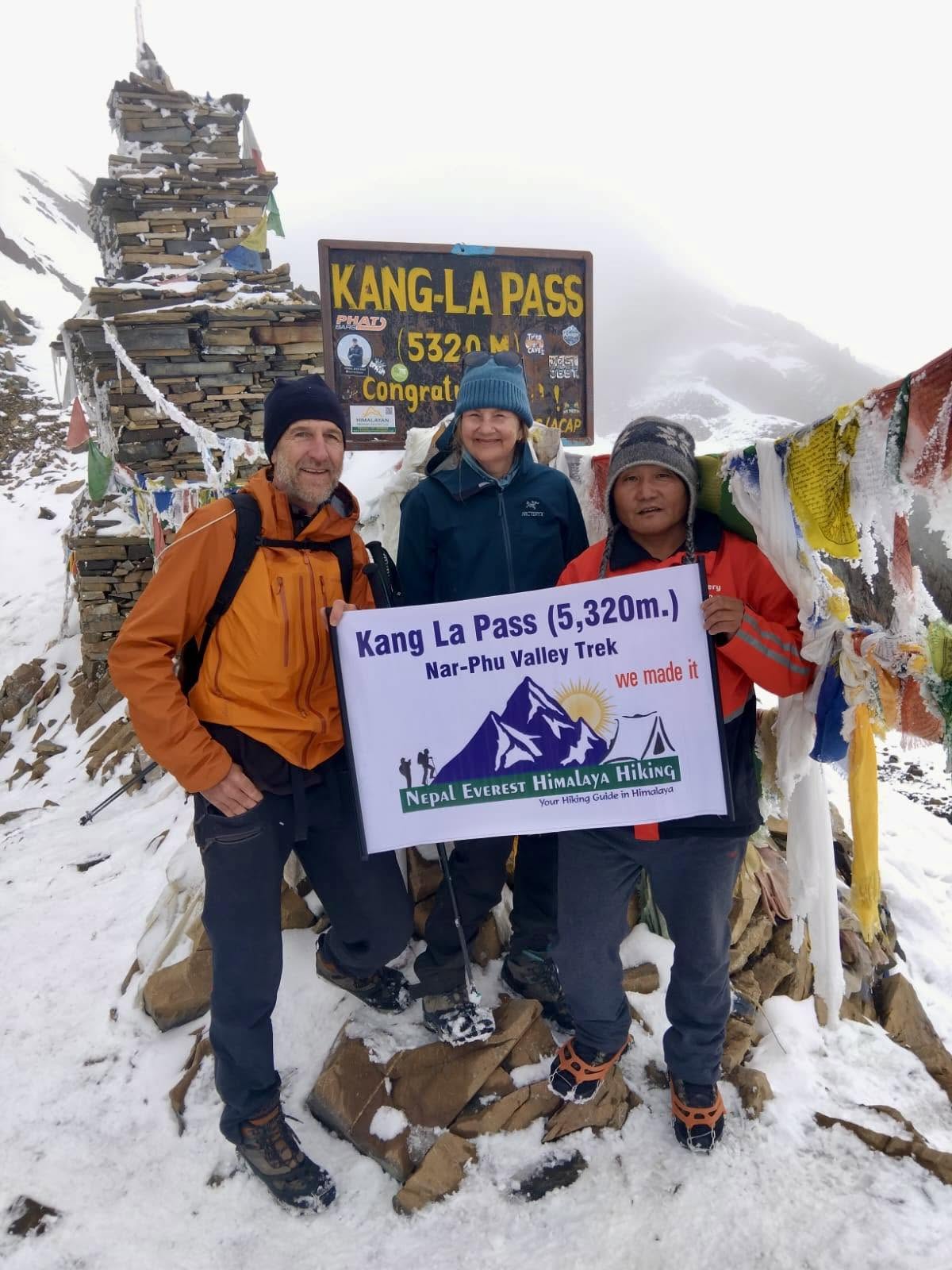
To provide useful first-hand information, we have included photographs from our actual Nar Phu trekking journeys along with examples of trekking permits and related documentation.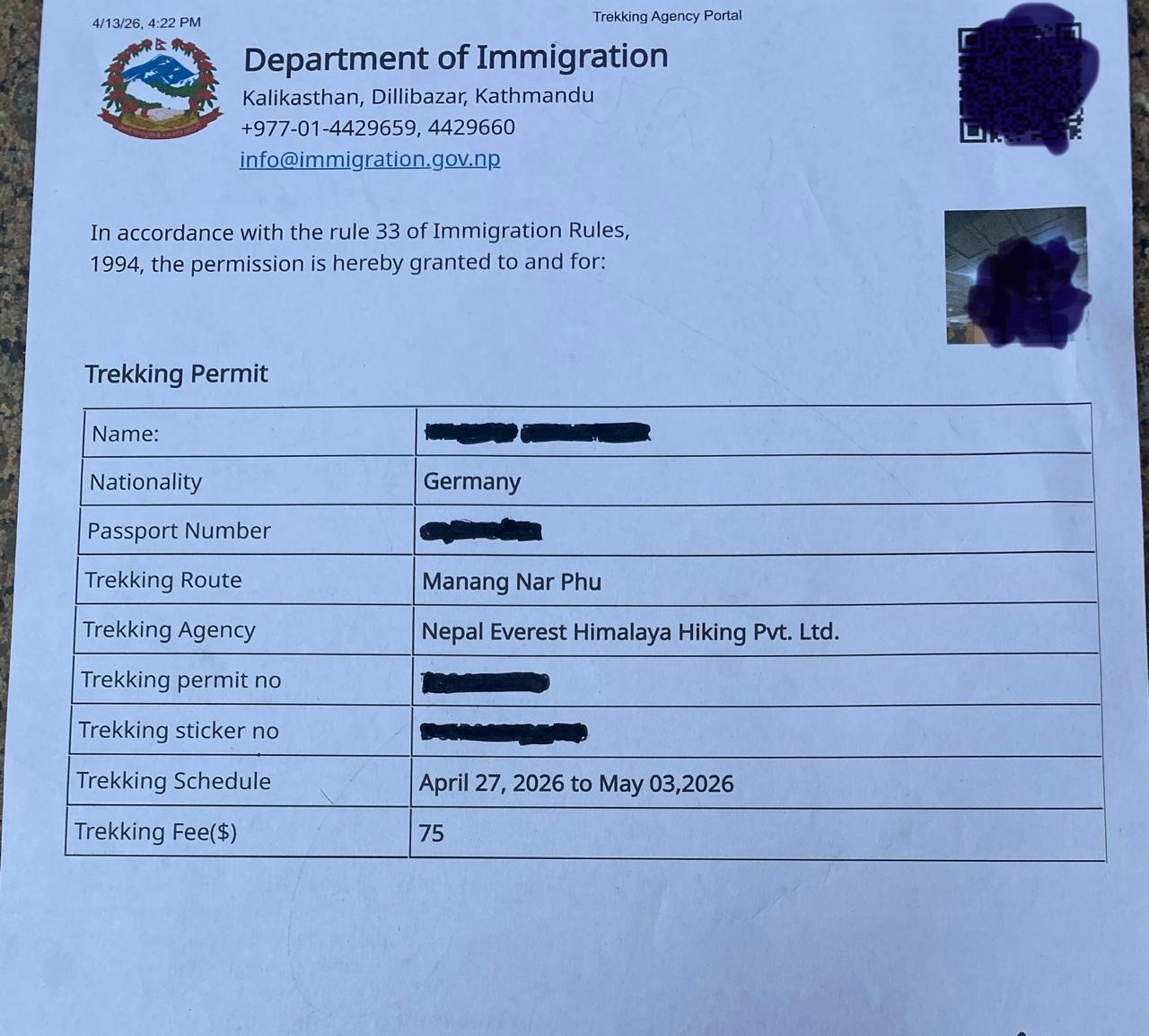
Nar Phu Restricted Area Permit
Note: The permit shown in the attached image was issued in April 2026, when the applicable fee was USD 75 per person for the first 7 days.
These photographs and permit examples help visitors understand the actual trekking route, permit process and experience in the Nar Phu Valley.
%20Permit.jpeg)
The Annapurna Conservation Area Permit (ACAP) is required for trekkers entering the Annapurna Conservation Area, including the Nar Phu Valley Trek and other designated trekking areas within the conservation area.
%20Card(1).jpeg)
TIMS Card: A TIMS Card may also be required for the Nar Phu Valley Trek, depending on the prevailing trekking regulations and requirements.
For privacy and security, any personal or sensitive information shown on permit documents is covered.
Government permit fees and trekking regulations may change, so the latest official information should always be followed.
Important Information About Permit Fees and Requirements
Trekking permit fees and regulations in Nepal may be revised by the Government of Nepal.
The information on this page is provided as a practical guide based on the government information available for the Nar Phu trekking route and the current trekking-registration requirements.
Before travelling to Nepal, trekkers should confirm the latest Restricted Area Permit fee, ACAP requirements, TIMS requirements and other applicable regulations for their specific itinerary.
For the most authoritative information about restricted trekking routes and permit fees,
please refer to the Department of Immigration, Government of Nepal.
For current TIMS information, including trekking routes that require a guide and an agency-issued TIMS card,
please refer to the Nepal Tourism Board – TIMS Card Information.
For current protected-area entry fees, including the Annapurna Conservation Area Permit (ACAP),
please refer to the Nepal Tourism Board – Park Entry Fee Information.
For detailed itinerary, route, permits, cost, and trip information, please see our Nar Phu Valley Trek details:
Nar Phu Valley Trek – 10 Days:
www.nepaltrekkinginhimalaya.com/pages/nar-phu-valley-trek-10-days
Nar Phu Valley Trek – 9 Days:
www.nepaltrekkinginhimalaya.com/pages/nar-phu-valley-trek-9-days
Nar Phu Valley Trek with Ice Lake – 11 Days:
www.nepaltrekkinginhimalaya.com/pages/nar-phu-valley-trek-with-ice-lake