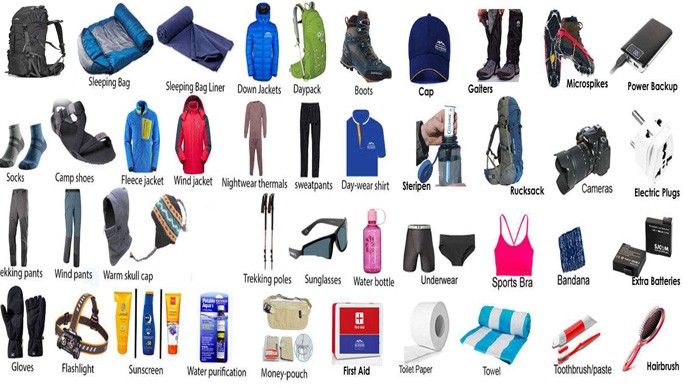
Preparing for a trek in Nepal is exciting, but if this is your first Himalayan trek, you may wonder what you really need to bring. This practical trekking equipment and packing checklist is designed to make your preparation easier.
You do not need to carry every item listed on this page. The equipment you need depends on your trekking route, maximum altitude, season, weather conditions, trek duration, and your individual needs.
Our main recommendation is simple: pack light and pack practically. Bring good-quality essentials that you are comfortable using and avoid carrying unnecessary equipment.
If you are unsure about any item, please contact us before your trek. We can advise you according to your specific itinerary, season, altitude and trekking conditions.
This checklist is provided for general information and preparation purposes only.
Not every item on this list is necessary for every trek. Some items are essential for certain routes or seasons, while others are optional and may not be needed at all.
For example, a lower-altitude trek such as Poon Hill generally requires less cold-weather equipment than a high-altitude trek such as Everest Base Camp, Annapurna Circuit, Manaslu Circuit or a trek involving a high mountain pass.
Your final packing list should therefore be based on:
Your trekking route
Maximum altitude
Time of year
Expected weather conditions
Number of trekking days
Tea-house or camping arrangements
Whether you are trekking with a porter
Equipment already included in your particular package
Your own personal requirements
When you book your trek with us, we are happy to advise you about the equipment specifically appropriate for your itinerary.
The following items are generally recommended for most multi-day trekking routes in Nepal.
Comfortable daypack, approximately 20–30 liters
Comfortable shoulder straps
Waist belt, if preferred
Rain cover
Enough space for water, snacks, camera, documents and an extra layer
You normally carry your daypack while trekking, so keep it comfortable and reasonably light.
Approximately 50–70 liter trekking duffel
Strong and weather-resistant
Waterproof liner or separate dry bags recommended
Soft-sided duffel is generally more practical than a large hard suitcase
If your trek includes porter service, your main trekking belongings can normally be packed in the duffel carried by the porter. Your trekking company will advise you about the applicable baggage and weight arrangements for your particular trek.
A separate small suitcase, backpack or travel bag can be useful for clothing and belongings that you do not need during the trek.
Depending on your arrangement, these belongings can normally be left securely at your Kathmandu hotel or with the trekking company.
The best approach for trekking in Nepal is generally layering rather than bringing one very heavy item.
2 moisture-wicking T-shirts or trekking shirts
1–2 long-sleeved shirts
Thermal top for colder or higher-altitude treks
Thermal bottoms for colder or higher-altitude treks
Merino wool or good-quality synthetic materials are practical choices because they dry more quickly than ordinary cotton.
Fleece jacket or warm sweater
Lightweight insulated jacket
Additional warm layer for higher-altitude trekking when required
Waterproof and windproof jacket
Waterproof trousers or rain pants
Jacket with a hood recommended
A waterproof outer layer is useful even when the weather forecast looks favorable because mountain weather can change quickly.
1–2 pairs of comfortable trekking trousers
Lightweight quick-drying trousers
Comfortable underwear
Thermal underwear for colder treks
Lightweight shorts, if preferred
Waterproof over-trousers for wet or snowy conditions
Avoid bringing too many pairs of heavy trousers. Quick-drying clothing is generally more practical for a multi-day trek.
Comfortable trekking boots with good grip
Waterproof or water-resistant boots recommended
Boots should be properly broken in before arriving in Nepal
Do not bring brand-new trekking boots for a long trek. Wear them on several walks before your Nepal trip so you know they are comfortable.
3–4 pairs of good-quality trekking socks
Wool or synthetic hiking socks
1–2 pairs of warmer socks for colder or higher-altitude treks
Lightweight sandals, sneakers or comfortable camp shoes
These are useful when you take off your trekking boots at the end of the day.
Gaiters are optional for many standard treks but can be useful during:
Snowy conditions
Wet conditions
Muddy trails
Monsoon trekking
High mountain passes
For higher-altitude and colder-season treks, consider:
Warm down or insulated jacket
Warm fleece
Warm hat or beanie
Sun hat or cap
Buff or neck gaiter
Lightweight gloves
Warm insulated gloves or mittens for colder conditions
Thermal base layers
The amount of warm clothing required depends greatly on your altitude, route and season.
Mountain weather can change quickly.
Recommended:
Waterproof jacket
Waterproof trousers or rain pants
Backpack rain cover
Waterproof dry bags or plastic bags
Small umbrella, optional
Waterproof protection for electronics and important documents
During the monsoon and shoulder seasons, additional rain protection can be particularly useful.
Trekking poles are optional but useful for many Nepal treks.
They can be particularly helpful on:
Long descents
Steep ascents
Uneven trails
Rocky terrain
High-altitude routes
Treks involving mountain passes
Many trekkers find trekking poles useful for balance and support, especially on long descents.
Headlamp
Spare batteries or rechargeable battery
A headlamp is useful for early-morning starts, walking around tea houses at night and in areas where electricity may be limited.
Staying properly hydrated is important during trekking.
Recommended:
1–2 reusable water bottles or a hydration bladder
Personal water filter bottle, optional but useful
Water purification tablets, drops or another suitable purification method
Insulated bottle or thermos, optional for colder conditions
You can usually refill water at various points along many trekking routes. Depending on the route, water may be available from tea houses, lodges, local shops, village sources and other designated refill points.
Your guide can advise you about suitable water sources and water-treatment options during your trek.
A personal water filter bottle can be a convenient option because it allows you to refill water and filter it before drinking.
Water purification tablets, drops or another suitable purification system can also be carried as an alternative or backup.
You do not necessarily need to purchase a water filter bottle before traveling to Nepal.
Water filter bottles and other water-purification products are available from trekking and outdoor shops in Kathmandu and Pokhara, and some common trekking supplies may also be available along popular trekking routes.
However, we recommend arranging your water filtration or purification method before starting your trek, rather than waiting until you are already on the trail. Availability and selection can be more limited in remote mountain areas.
If you are unsure which option is appropriate for your trek, please contact us before departure. We can advise you according to your trekking route, altitude and itinerary.
A water filter or purification system is not necessarily required for every trek. It is a personal choice and should be selected according to your itinerary and preferences.
Avoid relying only on disposable plastic bottles whenever possible.
At higher elevations, UV exposure can be strong.
Recommended:
Sunglasses with UV protection
High-SPF sunscreen
Lip balm with SPF
Sun hat or cap
Buff or scarf
Good sunglasses are particularly important on snowy routes and high mountain passes.
Bring only small, practical quantities of personal toiletries.
Toothbrush and toothpaste
Small soap or biodegradable soap
Shampoo, if required
Small quick-drying towel
Toilet paper/tissues
Wet wipes
Hand sanitizer
Moisturizer
Sunscreen
Lip balm
Personal hygiene products
Nail clippers
Small personal mirror, optional
Personal hygiene facilities vary between tea houses and trekking areas, particularly at higher elevations, so a few basic personal items can make the trek more comfortable.
We recommend carrying:
Your regular personal medications
Any prescribed medication you normally use
Basic blister protection
Adhesive bandages
Basic personal first-aid supplies
Oral rehydration/electrolyte products, if you normally use them
Other personal medical supplies you regularly require
If you take prescription medication, bring enough for your trip and keep it in its original packaging where practical.
For medication related to altitude sickness or other medical concerns, consult your doctor or travel-health professional before traveling.
Our guides carry a basic first-aid kit as appropriate for the trek, but trekkers should still bring their own personal medications and essential personal medical supplies.
Mobile phone
Phone charging cable
Camera, if desired
Extra batteries, if required
Power bank
Universal travel adapter
Charging cables
Small protective bag for electronics
Charging facilities are available at many tea houses, although availability can vary by location, weather and altitude.
A power bank is therefore useful, especially on longer and higher-altitude treks.
Keep important documents and valuables protected and easily accessible.
Passport
Travel insurance documents
Copies of important travel documents
Trekking permits, where applicable
Emergency contact information
Credit/debit card
Some Nepalese rupees in cash
Small wallet or money pouch
Mobile phone
We recommend keeping your passport, money, phone and other valuables in your daypack rather than in your main luggage.
These are optional but can be useful:
Earplugs
Small book or e-reader
Notebook and pen
Small travel pillow
Eye mask
Favorite snacks or energy bars
Small thermos
Camera accessories
Small laundry bag
Lightweight sitting pad
Do not bring too many comfort items. Remember that every extra item adds weight.
Your daypack should contain the things you may need while walking.
We generally recommend keeping it light and carrying:
Water
Snacks
Phone/camera
Passport or important documents, when required
Sunglasses
Sunscreen
Rain jacket
Warm layer
Gloves or hat when needed
Personal medication
Small first-aid items
Toilet paper/tissues
Hand sanitizer
Power bank
Camera, if using one
Your guide can help you decide what should stay in your daypack and what can remain in your main luggage.
Your main trekking luggage can contain:
Extra clothing
Sleeping bag, if required
Fleece or down jacket
Extra socks
Toiletries
Personal items
Extra footwear
Other equipment not needed during the day's walk
Pack your belongings inside waterproof bags or dry bags within the duffel whenever possible.
Additional equipment may be appropriate for treks reaching higher elevations or crossing mountain passes.
Depending on the route and season, this may include:
Warmer down or insulated jacket
Thermal base layers
Heavier gloves or mittens
Warm hat
Neck gaiter or balaclava
Warm sleeping bag
Gaiters
Trekking poles
Microspikes or other traction equipment when conditions require them
Extra sun protection
Additional waterproof clothing
Do not automatically purchase all of these items.
The requirement depends on your exact route, altitude, season and current trail conditions. We can advise you before your trek.
For winter treks or routes where snow and ice are expected, additional equipment may be required.
Depending on the route:
Insulated clothing
Warm gloves or mittens
Thermal layers
Warm sleeping bag
Gaiters
Appropriate traction equipment
Additional waterproof protection
Your guide or trekking company should confirm any special equipment required for your particular itinerary.
One of the most common mistakes made by first-time trekkers is overpacking.
You generally do not need to bring:
Large amounts of clothing
Multiple heavy jackets
Several pairs of shoes
Large bottles of toiletries
Heavy books
Unnecessary electronic equipment
Large towels
Excessive food
Camping equipment for a standard tea-house trek
Equipment that is not required for your particular itinerary
Pack for the trek you are actually doing, not for every possible situation.
You do not necessarily need to purchase every piece of trekking equipment before leaving your home country.
Kathmandu and Pokhara have many trekking and outdoor shops where commonly used trekking equipment can be purchased or, for some items, rented.
Some basic trekking supplies may also be available in larger villages along popular trekking routes. However, availability and selection can be more limited in remote areas.
We recommend bringing important personal items that you already know fit you well, particularly:
Comfortable trekking boots
Personal clothing
Personal medications
Sunglasses
Personal hygiene products
Favorite or specialized trekking equipment
If you plan to buy or rent equipment in Kathmandu or Pokhara, please let us know in advance. We can advise you about what may be appropriate for your trek.
A lighter bag generally makes trekking more comfortable.
You will be walking for several hours each day, often on uneven mountain trails with frequent ascents and descents. Carrying unnecessary weight can make the experience more tiring.
Before leaving home, lay everything out and ask yourself:
“Will I actually use this during my trek?”
If the answer is no, consider leaving it behind.
At the same time, do not remove essential protection against cold, rain, sun or changing mountain weather simply to reduce weight.
The goal is not to pack as little as possible.
The goal is to pack wisely.
There is no single equipment list that is perfect for every trek in Nepal.
A Poon Hill trek, for example, does not require the same equipment as an Everest Base Camp trek. A high mountain pass or winter trek may require additional protection and equipment.
For this reason, we recommend using this page as a general preparation guide and then checking the equipment requirements for your specific itinerary.
If you have already booked your trek with Nepal Everest Himalaya Hiking Pvt. Ltd. and are unsure about something on this list, please contact us. We will be happy to advise you based on your route, trekking season, maximum altitude and itinerary.
Before leaving for Nepal, make sure you have:
Comfortable broken-in trekking boots
Suitable clothing layers
Waterproof protection
Warm clothing appropriate for your trek
Comfortable daypack
Main trekking duffel
Reusable water bottles or hydration system
Water filter bottle or suitable purification method, if desired
Sunglasses and sun protection
Headlamp
Trekking poles, if desired
Personal medication
Basic personal first-aid supplies
Toiletries
Passport and travel documents
Travel insurance information
Phone and charging equipment
Power bank
Some Nepalese cash
Any trek-specific equipment recommended for your itinerary
Please do not feel that you need to purchase everything listed on this page.
This checklist is intended to help you understand the types of equipment that may be useful. Only the items appropriate to your particular trek, season and personal needs should be carried.
Our team is always happy to help you decide what is genuinely necessary so that you can travel comfortably without carrying unnecessary weight.
We wish you a safe, comfortable and memorable trekking experience in Nepal.
Nepal Everest Himalaya Hiking Pvt. Ltd.
(Your Hiking Guide in the Himalaya)
Nepal Government Registration No.: 215808/75/076
Kumarigal-7, Bouddha, Kathmandu, Nepal
Tel/WhatsApp: +977 9808717598
Email: nepalhimalayanhiking@gmail.com
Website: www.nepaltrekkinginhimalaya.com