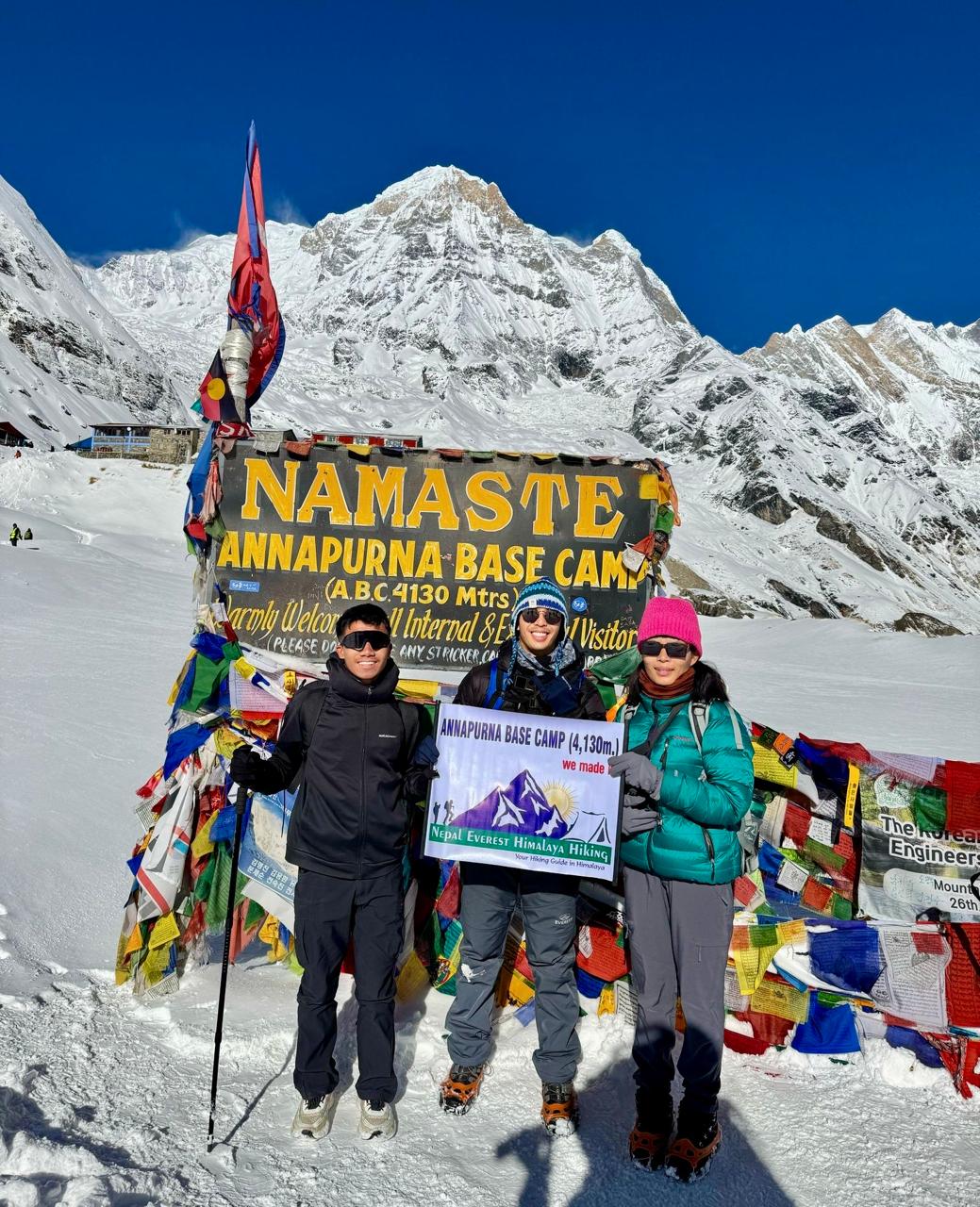
Tipping is a well-established tradition in Nepal’s trekking and climbing industry and is an important way for travelers to recognize the dedication, hard work, and support provided by trekking guides, climbing Sherpas, and porters throughout their journey.
Although there is no fixed or mandatory tipping amount in Nepal, tipping is traditionally given at the end of a trek or climbing expedition as a gesture of appreciation for good service. For many guides, climbing Sherpas, and porters, tips are also a meaningful supplement to their income and an important recognition of their contribution to a successful and enjoyable journey.
A tip is more than simply a monetary reward. In Nepal’s trekking and climbing culture, it is a gesture of respect and appreciation for the people who work hard to support travelers in the Himalayas.
If you are happy with the service provided by your trekking guide, climbing Sherpa, or porter, giving a tip at the end of the journey is a customary and appreciated way to express your gratitude. The amount is up to the traveler and may depend on the length, difficulty, quality of service, and overall experience of the trek or expedition.
If the service does not meet your expectations, you are not expected to give a tip. However, when the trekking or climbing team has provided dedicated, friendly, helpful, and professional service, a tip is a meaningful way to acknowledge their efforts.
There is no fixed tipping rate in Nepal. As a general principle, we recommend considering:
Length of the trek or expedition: Longer trips generally involve greater commitment from the trekking and climbing team.
Difficulty of the journey: More challenging treks and climbing expeditions usually require greater effort, responsibility, and support.
Quality of service: Consider the professionalism, helpfulness, friendliness, and dedication of your guide, climbing Sherpa, and porters.
Your overall satisfaction: The final amount should reflect your personal appreciation of the service you received.
For climbing expeditions such as Mera Peak, the climbing Sherpa and support team may have additional responsibilities and work in more demanding conditions. Guests may therefore wish to consider this when deciding on their tip.
Give the tip privately and respectfully rather than making a public display of it.
It is customary to give tips toward the end of the trek or expedition, when the service has been completed.
You may give tips directly to individual team members or, where appropriate, through the group leader or company representative.
If several guides, Sherpas, and porters have supported your journey, consider recognizing each person according to their role and contribution.
There is no need to make tipping a formal or uncomfortable occasion. A simple thank-you together with the tip is appreciated.
Ultimately, tipping is a personal decision. However, for those who are satisfied with the service, it is a valued tradition and a meaningful way to thank the people who work behind the scenes to make trekking and climbing adventures in the Himalayas possible.