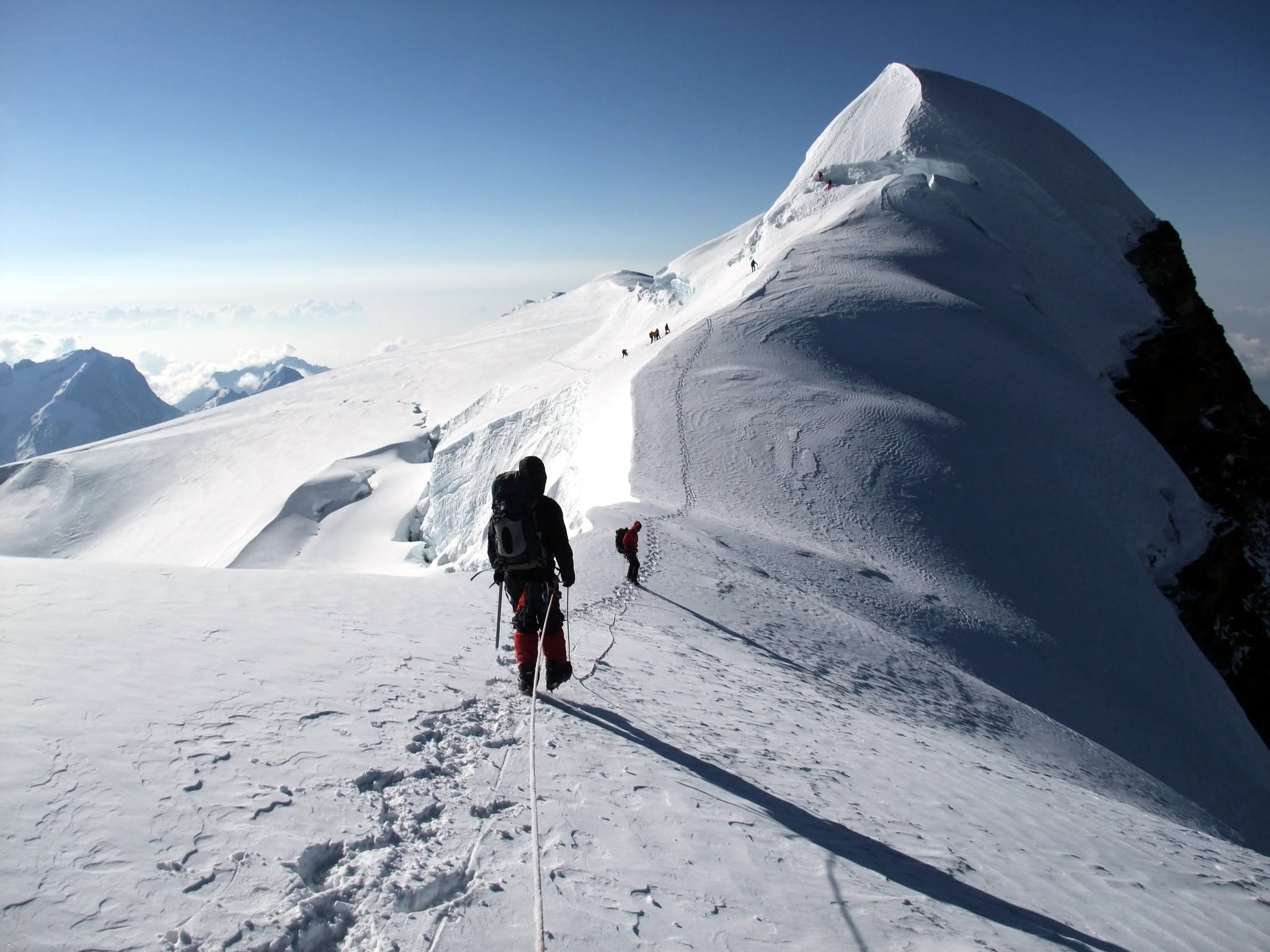
At 6,470 meters (21,247 feet), Mera Peak is one of Nepal's most popular high-altitude trekking peaks and an outstanding introduction to Himalayan mountaineering.
Located in the remote Hinku Valley of the Everest region, Mera Peak offers an exceptional combination of wilderness trekking, high-altitude adventure, glacier travel and summit climbing. From the summit, climbers can enjoy spectacular views of some of the world's highest mountains, including Mount Everest, Lhotse, Makalu, Cho Oyu and Kanchenjunga.
Although Mera Peak is often described as a relatively accessible 6,000-meter peak, it is still a serious high-altitude expedition. Climbers need good physical fitness, proper acclimatization, suitable mountaineering equipment and professional climbing support.
Elevation: 6,470 m / 21,247 ft
Location: Hinku Valley, Everest Region, Nepal
Peak Type: Trekking Peak
Difficulty: Challenging high-altitude climb
Best Seasons: Spring and Autumn
Typical Duration: Approximately 14–18 days
Maximum Altitude: 6,470 m
Suitable For: Fit trekkers and aspiring mountaineers
Mera Peak is an excellent choice for adventurers looking to experience their first Himalayan summit above 6,000 meters.
The expedition combines:
High-altitude trekking through the remote Hinku Valley
Glacier and snow travel
Basic mountaineering and rope skills
Gradual acclimatization
A challenging summit ascent
Exceptional Himalayan mountain views
A genuine Himalayan expedition experience
For climbers planning to attempt higher mountains in the future, Mera Peak can also provide valuable experience in high-altitude conditions.
Mera Peak can be climbed in different seasons, but spring and autumn are generally considered the most favorable periods because of better weather and visibility.
Spring is one of the most popular climbing seasons in Nepal. Weather conditions are generally more stable, temperatures improve gradually and mountain views are often excellent.
Autumn generally provides clear skies, good visibility and stable conditions, making it another excellent season for Mera Peak climbing.
Winter climbing is possible, but temperatures can be extremely cold at higher elevations. Climbers should be properly prepared for severe winter conditions.
The monsoon season brings rain, clouds and reduced visibility to lower sections of the route. Although climbing may still be possible, conditions are generally less favorable than in spring and autumn.
Mera Peak climbing requires the appropriate climbing and trekking permits under Nepal's current regulations.
Permit requirements and fees can change, so we verify the applicable requirements for each expedition before processing permits.
The Government of Nepal's current mountaineering fee schedule, effective from 1 September 2025, places mountains below 6,500 meters in the following royalty category:
| Season | Months | Foreign Climber Royalty |
|---|---|---|
| Spring | March–May | USD 350 per person |
| Autumn | September–November | USD 175 per person |
| Winter / Summer | December–February / June–August | USD 175 per person |
Mera Peak, at 6,470 meters, falls within the government's “Less than 6,500 m” category.
The Government of Nepal requires a garbage-management deposit for mountaineering expeditions.
For mountains below 6,500 meters, the current official amount is:
USD 500 per climbing expedition/group
This is a deposit for garbage management, not a per-person climbing royalty. The applicable refund and waste-management conditions are governed by the relevant government regulations.
The applicable protected-area entry permit must also be obtained for the route.
Nepal Tourism Board currently lists the foreigner entry fee for Makalu-Barun National Park as NPR 3,000 per person per entry. However, because Mera Peak is accessed through the Hinku Valley and Everest region, the exact protected-area permits applicable to your chosen route should be confirmed before departure.
Depending on the exact itinerary and route, local government entry fees or other applicable permissions may also be required.
We check the current requirements when arranging your expedition so that all necessary permits are obtained before the climb.
Government fees and mountaineering regulations in Nepal may be revised from time to time.
For this reason, we do not recommend relying on old information published on third-party trekking websites. We verify the applicable fees and requirements for your specific climbing season before processing your permits.
Department of Tourism, Government of Nepal – Mountaineering Fees
https://tourismdepartment.gov.np/pages/mountaineering-fee
The current Department of Tourism schedule is effective from 1 September 2025.
Mera Peak is a regulated trekking and climbing route, and travelers should follow Nepal's current guide and trekking-permit requirements.
Nepal Tourism Board's current TIMS information specifically includes Mera Peak Trek among the Everest-region routes where a licensed trekking guide and agency-issued TIMS Card are required under the revised provisions.
For the climbing expedition itself, we arrange the required permits, guide support and expedition logistics through our registered trekking company.
To begin the permit and expedition arrangements, we normally require:
A clear copy of your passport
Recent passport-sized photographs
Travel insurance details
High-altitude emergency evacuation coverage
Emergency contact information
Your planned travel and climbing dates
We strongly recommend insurance that specifically covers high-altitude trekking and mountaineering, including emergency helicopter evacuation where applicable.
Mera Peak requires appropriate mountaineering equipment. Depending on the season and route conditions, essential equipment may include:
Mountaineering boots
Crampons
Mountaineering ice axe
Climbing harness
Climbing helmet
Ascender / Jumar
Carabiners
Climbing rope
Prusik cord
Down jacket
Warm base layers
Waterproof and windproof clothing
Mountaineering gloves
Goggles and sunglasses
Headlamp
High-altitude sleeping bag
Our climbing team provides detailed equipment guidance before the expedition.
Previous technical climbing experience is not necessarily required for Mera Peak, but climbers should be physically fit and prepared for demanding days at high altitude.
Prior experience with high-altitude trekking is an advantage. Climbers should also be prepared to use basic mountaineering equipment and follow the instructions of the climbing team.
Good preparation includes:
Cardiovascular fitness
Strong endurance
Regular walking or hiking training
Mental preparation for cold and high-altitude conditions
Appropriate acclimatization
Willingness to follow professional safety advice
Altitude is one of the most important challenges of the Mera Peak expedition.
Our itinerary is designed with gradual acclimatization to help the body adapt to increasing altitude. The climbing team monitors the health and condition of each member throughout the expedition.
Mountain weather can change rapidly. Therefore, the final summit attempt depends on weather conditions, snow and route conditions, individual health, and the professional judgment of the climbing team.
Safety always comes before reaching the summit.
If conditions are unsafe, the summit attempt may be delayed, adjusted or cancelled.
Mera Peak is part of a fragile Himalayan environment. Every climber has a responsibility to protect the mountain.
We encourage all expedition members to:
Minimize waste
Carry personal waste properly
Avoid unnecessary plastic
Respect local communities and traditions
Follow designated trails
Respect wildlife and the natural environment
Follow all government environmental requirements
The government-required garbage-management deposit is an important part of Nepal's mountaineering waste-management system.
At Nepal Everest Himalaya Hiking Pvt. Ltd., we organize professionally guided Mera Peak climbing expeditions with careful attention to safety, acclimatization and responsible mountain travel.
Our services can include:
Mera Peak climbing permit arrangements
Trekking and protected-area permits
Experienced climbing guide support
Accommodation and meals
Trekking and climbing logistics
Required climbing equipment
Ground transportation
Acclimatization planning
Emergency assistance and evacuation coordination
Our goal is to provide a safe, reliable and personalized Himalayan climbing experience from your arrival in Nepal through your return to Kathmandu.
Mera Peak offers an unforgettable opportunity to experience the high Himalayas and stand on a 6,470-meter summit surrounded by some of the world's greatest mountains.
Whether you are preparing for your first Himalayan climbing experience or looking to build experience for future expeditions, our team can help you plan a suitable itinerary based on your experience, fitness, preferred season and travel dates.
Contact Nepal Everest Himalaya Hiking Pvt. Ltd. to discuss your Mera Peak climbing plans.
We will help you confirm the appropriate itinerary, permits, equipment, climbing support and current government requirements for your expedition.
For the most reliable and up-to-date information, we recommend referring to official Nepal government and tourism authorities:
Department of Tourism, Government of Nepal – Mountaineering Fees:
https://tourismdepartment.gov.np/pages/mountaineering-fee
Nepal Tourism Board – Mountaineering:
https://trade.ntb.gov.np/tourist-activities/mountaineering/
Nepal Tourism Board – Park Entry Fees:
https://ntb.gov.np/plan-your-trip/before-you-come/park-entry-fees
Nepal Tourism Board – TIMS Card:
https://ntb.gov.np/en/plan-your-trip/before-you-come/tims-card
Official fees, permit requirements and regulations may be updated by the relevant authorities. We verify the applicable requirements before processing each expedition.
Page Title:
Mera Peak Climbing in Nepal
Menu Title:
Mera Peak Climbing
Meta Title:
Mera Peak Climbing Nepal | Permit, Cost & Complete Guide
Meta Description:
Mera Peak Climbing in Nepal at 6,470m. Explore climbing permits, current government fees, best seasons, difficulty, equipment and requirements for a guided Himalayan expedition.
Meta Keywords:
Mera Peak Climbing Nepal, Mera Peak Expedition, Mera Peak Permit, Mera Peak Climbing Cost, Mera Peak 6470m, Mera Peak Trek, Nepal Peak Climbing, Mera Peak Guide, Mera Peak Climbing Permit, Mera Peak Expedition Nepal