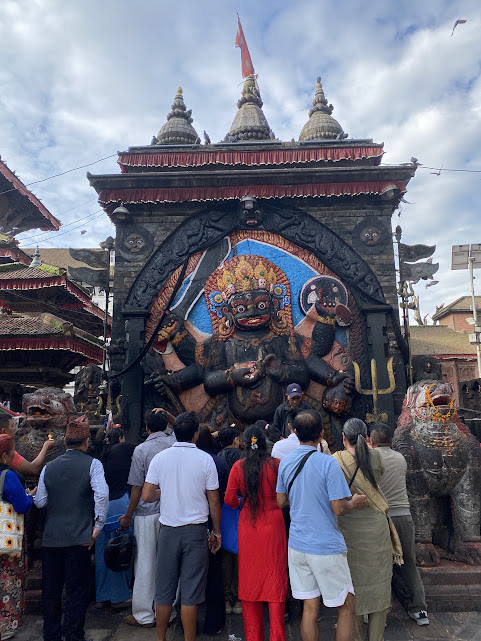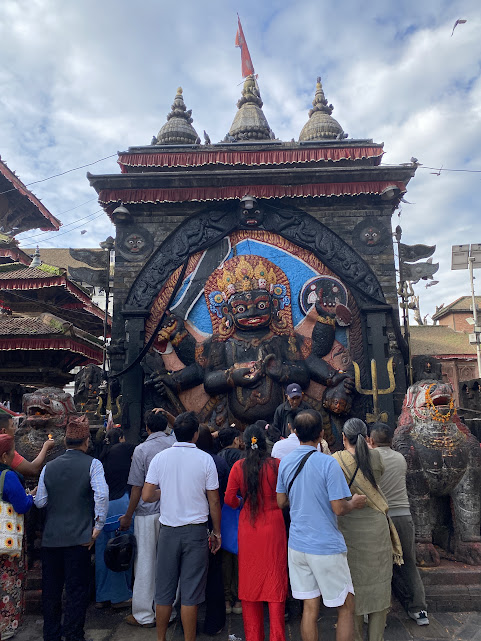
Located in the historic heart of Kathmandu, Kal Bhairav is one of the most striking religious and cultural landmarks within Kathmandu Durbar Square, also known as Hanuman Dhoka. The imposing stone image represents a fierce manifestation of Lord Shiva and has remained an important object of devotion for generations.
For visitors to Nepal, Kal Bhairav offers a fascinating opportunity to experience the country’s living heritage. Whether you are interested in history, religion, architecture, photography, culture, or simply discovering Kathmandu, this remarkable shrine provides a meaningful glimpse into the traditions of the Kathmandu Valley.
Kal Bhairav has a long history closely connected with the religious and cultural traditions of the Kathmandu Valley.
It is important to distinguish between the ancient stone image and the shrine surrounding it. According to the Kathmandu Valley Preservation Trust (KVPT), the Kal Bhairav shrine was consecrated by King Pratap Malla in the 17th century, while the principal stone image of Bhairav is believed to predate the 10th century.
This distinction is important because the 17th-century date refers to the historic shrine and its setting, rather than necessarily indicating the age of the stone image itself.
The Nepal Tourism Board also identifies Kal Bhairav as one of the major attractions of Kathmandu Durbar Square and describes the statue as one of the largest 17th-century stone statues in Kathmandu.
Together, the ancient image and the historic shrine reflect the different layers of Kathmandu’s cultural history and the exceptional stone craftsmanship for which the Kathmandu Valley is renowned.
Kal Bhairav is not simply a monument from the past. It remains an active and respected place of worship.
In Hindu tradition, Bhairav is regarded as a fierce form of Lord Shiva and is associated with protection and guardianship. The Kathmandu Valley Preservation Trust describes Bhairav as a major protector of the Kathmandu Valley and its people and notes that Kal Bhairav is among the most frequently visited shrines in the valley.
Devotees continue to visit the shrine to offer prayers and traditional offerings. The continuing religious significance of the site is an important part of Kathmandu’s living cultural heritage.
For visitors, this provides an opportunity to experience a sacred place where historic architecture, religious traditions and everyday community life continue to exist together.
Kal Bhairav stands at the centre of Kathmandu Durbar Square, one of the most important historic areas of Nepal’s capital.
Kathmandu Durbar Square, also known as Hanuman Dhoka, forms one of the seven monument zones within the Kathmandu Valley UNESCO World Heritage property. UNESCO recognizes the valley for its exceptional historic, artistic and cultural heritage, including its palaces, temples, public spaces and traditional Newar craftsmanship.
The surrounding Durbar Square contains an extraordinary collection of historic structures and religious sites, including the Hanuman Dhoka Palace Complex, Kumari Ghar, Kasthamandap and numerous temples, courtyards and traditional buildings. Nepal Tourism Board describes Kathmandu Durbar Square as a major heritage attraction in the heart of the city.
Exploring the area provides visitors with a deeper understanding of the history, architecture and religious traditions that have shaped Kathmandu over many centuries.
The imposing stone image of Kal Bhairav immediately attracts attention, but its importance goes far beyond its impressive appearance.
The shrine reflects the close relationship between religion, art, architecture and community life that has shaped the Kathmandu Valley for centuries.
Its continuing religious importance also makes Kal Bhairav different from a monument that exists only as a reminder of the past. People continue to visit and worship here, allowing visitors to experience an important part of Kathmandu’s living heritage.
The shrine also demonstrates the exceptional stone-carving traditions of the Kathmandu Valley. The Kathmandu Valley is internationally recognized for its highly developed craftsmanship in stone, timber, brick and bronze, particularly within its historic Newar cultural traditions.
Kal Bhairav is located in Basantapur, in the historic centre of Kathmandu, and can easily be included in a sightseeing visit to Kathmandu Durbar Square.
Visitors can combine a visit to the shrine with nearby cultural and historic attractions, including Hanuman Dhoka, Kumari Ghar, Kasthamandap and the traditional courtyards and streets surrounding the Durbar Square.
The area is also rewarding for visitors interested in photography and architecture. The combination of historic buildings, detailed craftsmanship, religious activity and everyday life creates a distinctive atmosphere that reflects the character of old Kathmandu.
As Kal Bhairav remains an active religious site, visitors should dress respectfully, behave appropriately and avoid disturbing devotees during prayers, ceremonies or other religious activities.
Kal Bhairav is suitable for a wide range of visitors.
For history and culture enthusiasts, it offers an opportunity to explore Kathmandu’s ancient religious traditions and historic architecture.
For photographers and architecture lovers, the imposing stone image and surrounding Newar heritage provide an exceptional cultural setting.
For visitors interested in Hindu traditions and spirituality, the shrine offers an opportunity to observe an important place of worship.
For families and first-time visitors to Kathmandu, Kal Bhairav can easily be included in a broader exploration of Kathmandu Durbar Square.
For trekkers and adventure travellers, a visit to Kal Bhairav before or after a Himalayan journey provides an opportunity to experience another important dimension of Nepal beyond its mountains.
A visit to Kal Bhairav offers much more than an opportunity to see an impressive historic stone image.
It provides a glimpse into the beliefs, traditions, craftsmanship and community life that have shaped Kathmandu for centuries.
Nepal is internationally known for the Himalayas, but its cultural heritage is equally remarkable. The temples, palaces, courtyards, festivals, traditional architecture and religious practices of the Kathmandu Valley are an essential part of the country's identity.
Visiting Kal Bhairav allows travellers to experience this cultural dimension of Nepal in the heart of its historic capital.
Kal Bhairav represents a remarkable connection between Kathmandu’s past and present. Its ancient stone image, historic shrine and continuing religious significance make it an important landmark within Kathmandu Durbar Square.
Whether you are visiting Nepal for its mountains, exploring its history and architecture, seeking a cultural or spiritual experience, travelling with family, or simply discovering Kathmandu for the first time, Kal Bhairav offers a meaningful glimpse into the living heritage of the Kathmandu Valley.
A visit here is an opportunity to look beyond the mountains and discover another side of Nepal—one shaped by centuries of art, faith, architecture, tradition and community.
Kal Bhairav is therefore not merely a monument to Kathmandu’s past. It remains a living part of the city’s cultural and spiritual heritage.